
New research reveals threat actors are operationalizing AI at unprecedented scale, with more than 22 million illicit AI discussions, 1.7 billion stolen credentials, and ransomware-as-a-service activity up 45%.
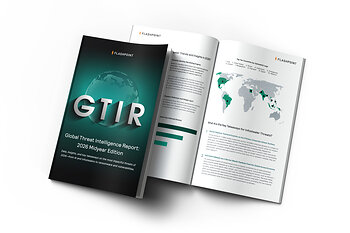
WASHINGTON, Aug. 13, 2026 /PRNewswire-PRWeb/ -- , the global leader in threat intelligence, today announced the release of the , providing security leaders with a data-driven assessment of AI-driven cyber threats and how adversaries are operationalizing artificial intelligence to accelerate attacks across the cyber threat landscape. Drawing on Flashpoint's Primary Source Collection (PSC), the report examines how AI, infostealers, vulnerabilities, ransomware, and geopolitical conflict are reshaping organizational risk and compressing the time defenders have to respond.
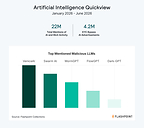
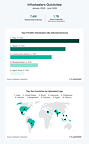
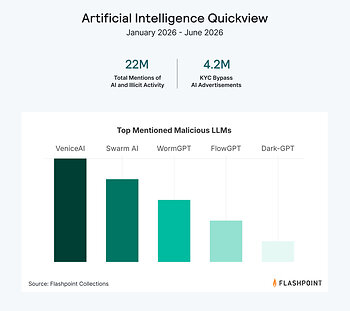
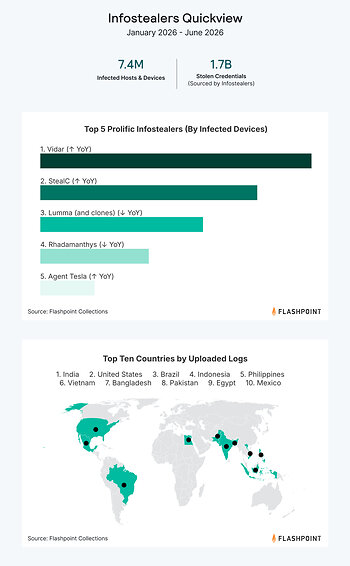
Flashpoint tracked more than 22 million illicit discussions involving criminal AI toolkits, 7.4 million infected hosts yielding 1.7 billion stolen credentials, more than 21,600 disclosed vulnerabilities in six months, and a 45% increase in ransomware-as-a-service activity compared to the previous reporting period. Together, these trends demonstrate that AI-driven attacks have moved from experimentation to operational deployment, increasing the speed, scale, and sophistication of modern cybercrime.
"AI is compressing the time between opportunity and exploitation. Capabilities that once took significant expertise, coordination, and time to develop are becoming faster to build, easier to scale, and harder to detect," said Josh Lefkowitz, Co-Founder and CEO of Flashpoint. "Security teams are facing an adversary ecosystem that can use AI to iterate at unprecedented speed — the only way to keep pace is with primary-source intelligence that surfaces adversary behavior before attacks unfold."
AI Is Accelerating Every Stage of the Attack Lifecycle
Flashpoint observed more than 22 million illicit discussions centered on AI during the first half of 2026, reflecting the growing availability of malicious AI toolkits and customized language models designed specifically for cybercrime. Rather than relying on public underground communities for development, threat actors are increasingly deploying locally hosted, safeguard-free AI models capable of generating phishing campaigns, malware, exploit code, and social engineering content at machine speed.
Identity Continues to Replace Traditional Network Intrusion
The report found that infostealers infected more than 7.4 million hosts globally, harvesting approximately 1.7 billion credentials and identity artifacts during the first six months of the year. These stolen credentials increasingly enable attackers to bypass traditional security controls by authenticating with legitimate user identities rather than exploiting technical weaknesses, reinforcing identity as one of today's most critical attack surfaces.
Vulnerability Management Is Becoming a Race Against AI
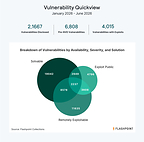
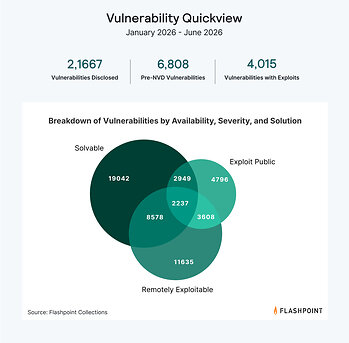
Flashpoint tracked 21,667 vulnerability disclosures between January and June 2026, with nearly one in five already accompanied by public or functional exploit code. At the same time, organizations face growing pressure from AI-assisted exploit development, expanding Known Exploited Vulnerabilities (KEV), and delays in public vulnerability enrichment. The report concludes that effective vulnerability management increasingly depends on prioritizing exploitable risk rather than severity scores alone.
Ransomware Operations Continue to Scale
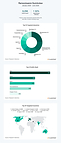
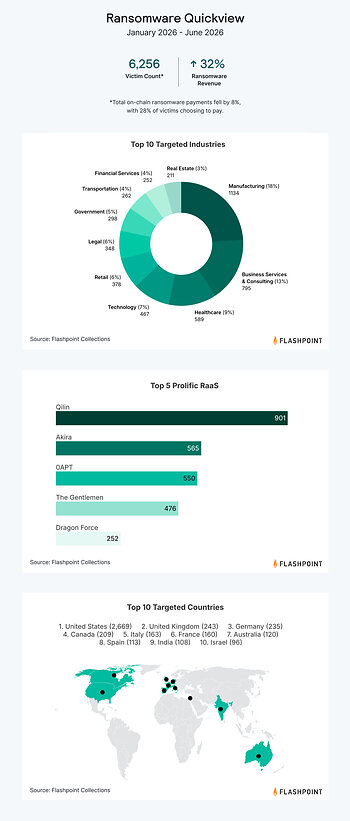
Flashpoint documented 6,256 verified ransomware victims during the reporting period — a 45% increase over the first half of 2025. Although fewer organizations are paying ransom demands, ransomware operators continue expanding activity through automation, lower-cost initial access, and mature Ransomware-as-a-Service ecosystems that make sophisticated attacks more accessible to a broader range of threat actors.
Geopolitical Conflict Is Expanding Enterprise Risk
The report also examines how geopolitical instability increasingly intersects with cyber operations. During the first half of 2026, military conflict in the Middle East coincided with coordinated cyber campaigns targeting supply chains, financial institutions, industrial systems, and critical infrastructure, illustrating how geopolitical events can rapidly create operational risk for organizations well beyond the immediate conflict zone.
What Security Leaders Will Gain from the Midyear Edition
The 2026 Global Threat Intelligence Report: Midyear Edition provides organizations with:
- Analysis of how AI is accelerating cybercriminal operations across the attack lifecycle
- Intelligence on identity-based attacks fueled by the global infostealer ecosystem
- Research on evolving vulnerability exploitation and threat-informed prioritization
- Insights into ransomware trends, criminal business models, and extortion activity
- Analysis of geopolitical developments shaping cyber and physical risk
- Practical recommendations for strengthening intelligence-led security operations
The full 2026 Global Threat Intelligence Report: Midyear Edition is available .
Frequently Asked Questions (FAQ)
What is the Flashpoint 2026 Global Threat Intelligence Report: Midyear Edition?
The 2026 Global Threat Intelligence Report: Midyear Edition is Flashpoint's midyear update to its flagship Global Threat Intelligence Report (GTIR). Covering activity observed between January 1 and June 30, 2026, it provides a data-driven assessment of how today's threat landscape is evolving across artificial intelligence (AI), infostealers, vulnerability exploitation, ransomware, and geopolitical conflict. Powered by Flashpoint's Primary Source Collection (PSC), the report delivers intelligence gathered directly from the environments where threats originate.
How does the Midyear Edition differ from the annual GTIR?
While the annual GTIR establishes the major trends shaping the year ahead, the Midyear Edition examines how those trends have evolved during the first six months of 2026. It provides updated data, new intelligence, and analysis of emerging adversary tradecraft, helping organizations understand how the threat landscape is changing in near real time.
What are the top threat intelligence trends and predictions for 2026–2027?
Flashpoint's 2026 Global Threat Intelligence Report: Midyear Edition identifies several trends expected to shape the threat landscape through the remainder of 2026 and into 2027. These include the operationalization of agentic AI — driving the emergence of autonomous 'vibe crime' and AI-enabled attack chains — as well as the continued rise of identity-based attacks fueled by infostealers, faster exploitation of newly disclosed vulnerabilities, the expansion of ransomware-as-a-service (RaaS), and the growing convergence of cyber and geopolitical risk. Together, these trends point to a future where threat actors operate with greater speed, automation, and scale, requiring organizations to adopt intelligence-led security strategies.
What key threat actor TTPs have been observed in recent global threat intelligence reports?
Flashpoint's latest GTIR highlights several tactics, techniques, and procedures (TTPs) reshaping today's threat landscape, including:
- Operationalizing malicious AI to automate phishing, malware development, reconnaissance, and exploit generation.
- Prioritizing stolen identities over technical exploitation, with attackers leveraging 1.7 billion stolen credentials to authenticate into enterprise environments rather than break through traditional network perimeters.
- Accelerating vulnerability exploitation, including greater use of AI-assisted exploit development, exploitation of pre-NVD vulnerabilities, and threat-informed targeting of high-value flaws.
- Scaling ransomware through mature RaaS ecosystems, enabling a broader range of threat actors to conduct sophisticated extortion campaigns.
The report concludes that these evolving TTPs are increasing the speed, efficiency, and accessibility of cybercrime, making timely, primary-source threat intelligence increasingly critical for defenders.
Who should read the Midyear Edition?
The report is designed for CISOs, threat intelligence teams, vulnerability management leaders, security operations teams, fraud and risk professionals, and executive decision-makers seeking timely insight into today's evolving cyber and hybrid threats.
What makes this report different from other threat reports?
Unlike reports based primarily on telemetry, surveys, or post-incident analysis, the Midyear Edition is powered by Flashpoint's Primary Source Collection, gathering intelligence directly from Deep and Dark Web forums, illicit marketplaces, encrypted channels, and threat actor-linked infrastructure and ecosystems.
This approach provides early visibility into emerging tactics, tools, and operational models — often before they become widely weaponized.
What actionable guidance does the report provide?
Beyond trend analysis, the Midyear Edition provides:
- Analysis of how AI is accelerating adversary operations and reshaping cybercrime
- Intelligence to strengthen vulnerability prioritization and exposure management
- Insights into identity-based attacks fueled by infostealers and credential theft
- Research on ransomware trends and the evolving cyber extortion ecosystem
- Strategic recommendations for operationalizing primary-source intelligence and improving security decision-making
How can organizations use this report internally?
Security leaders can use the report to:
- Brief executive stakeholders on changes in the threat landscape
- Benchmark security programs against emerging adversary tradecraft
- Refine vulnerability prioritization and remediation strategies
- Strengthen identity protection and exposure management initiatives
- Guide intelligence-led security planning for the remainder of 2026
How does Flashpoint help organizations respond?
Flashpoint delivers primary-source intelligence, expert-led analysis, and operationally relevant insights through the Flashpoint Ignite platform, enabling organizations to detect, prioritize, and mitigate threats across cyber, fraud, vulnerability, physical security, and geopolitical domains.
About Flashpoint
Flashpoint is the leader and largest private provider of threat data and intelligence. We empower mission-critical businesses and governments worldwide to decisively confront complex security challenges, reduce risk, and improve operational resilience amid fast-evolving threats. Powered by Flashpoint Primary Source Collection, our proprietary approach to collecting intelligence directly from the digital spaces where threats originate, the Flashpoint Ignite platform delivers unmatched depth, speed, and relevance from open and hard-to-reach sources, enriched by human expertise and scaled by AI. Our solutions span cyber threat intelligence, vulnerability intelligence, geopolitical risk, physical security, fraud, and brand protection. The result: our customers safeguard critical assets, avoid financial loss, and protect lives. Discover more at.
Join the conversation. Follow us on and.
Media Contact
Kari Walker, RedIron PR for Flashpoint, 1 7039288886, [email protected]
SOURCE Flashpoint


Share this article